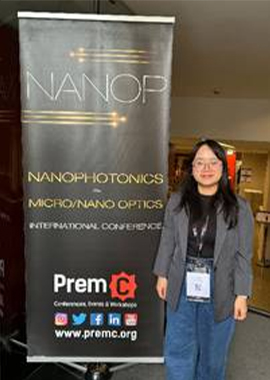
The 8th NANOP Conference was held in Rome, Italy, from October 5 to 7, 2026. The conference focused on the development of functional nanophotonics, highlighting significant advances in the field over recent decades and the transition of research concepts and theoretical developments into functional devices and practical applications. It provided an international platform for researchers to present their latest findings, exchange ideas, discuss emerging research directions, and explore future opportunities in nanophotonics. The conference also featured plenary talks by distinguished researchers from various fields, offering valuable insights into recent progress and future challenges in nanophotonics.
Under the session Photonic Nanomaterials, I presented my research entitled “Surface Fluorescence Enhancement by Bottom-Up-Fabricated Silicon Nanosphere Metasurface with Controlled Interparticle Distance.” The presentation focused on the bottom-up fabrication of large-area silicon nanosphere metasurfaces and the control of interparticle distance to enhance fluorescence signals. The discussion highlighted the influence of interparticle spacing on optical resonances and fluorescence enhancement, as well as the potential applications of these nanostructures in highly sensitive fluorescence detection and biosensing. The conference also provided an opportunity to exchange ideas with researchers working in related fields and gain insights into future research directions in photonic nanomaterials.
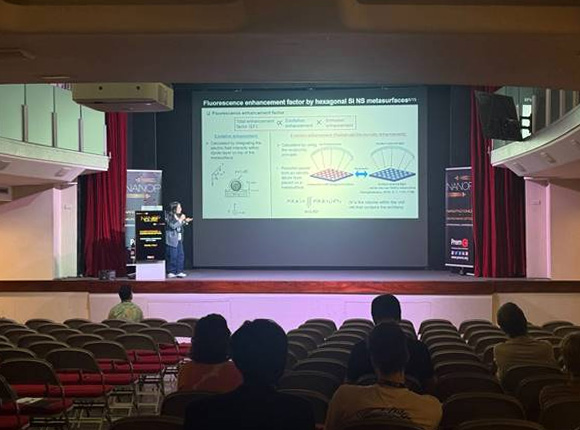
Attending the NANOP 2026 conference in Rome, Italy, was a valuable and memorable experience, especially as it was my first time participating in an international conference. Presenting my research to an international audience gave me the opportunity to share my findings, improve my scientific communication skills, and gain confidence in discussing my work with researchers from different countries and backgrounds.
Through presentations and discussions with other participants, I gained new insights into recent advances in nanophotonics and photonic nanomaterials. The interactions also allowed me to learn about different research approaches and exchange ideas that may contribute to the development of my future research.
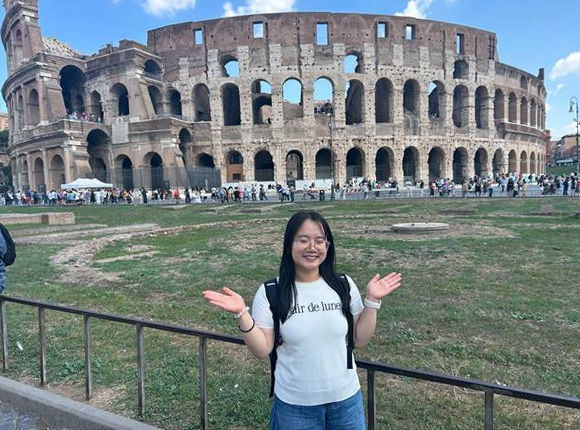
In addition to the academic experience, visiting Rome was a wonderful opportunity to experience a new culture and appreciate the city's rich history and cultural heritage. Meeting researchers from around the world and experiencing an international academic environment broadened my perspective and strengthened my motivation to pursue research with a more international outlook.
Overall, this conference was an important milestone in my academic journey. It not only deepened my understanding of the international research community but also encouraged me to participate more actively in future international conferences and pursue opportunities for international collaboration.